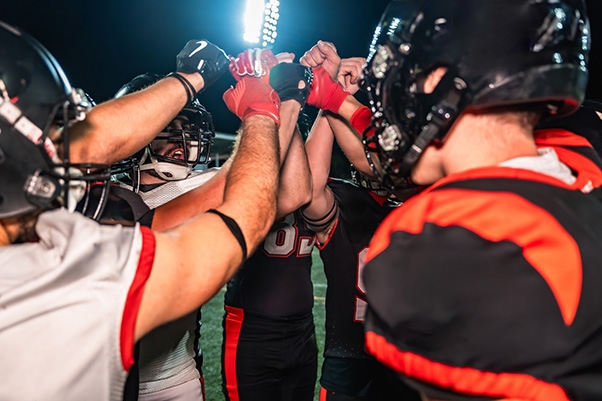
The stadium lights flip on, the band hits the fight song, and for the next four quarters, every snap is a collision. Football is a full-contact sprint that asks more of the body than almost any other sport: linemen battling in the trenches, receivers cutting at full speed, quarterbacks taking hits the moment the ball leaves their hand. And every position pays its own price, from a QB's overworked throwing shoulder to the knees that absorb every down on the line. Spotting the warning signs early is what separates a player who's back under the lights next week from one who's watching the rest of the season from the sideline. Here's a position-by-position breakdown of the injuries sports medicine specialists see most, and what a real comeback takes.
Quarterbacks: Shoulder and Elbow Strain Under Pressure
Quarterbacks repeat the same throwing motion dozens of times per game, which places enormous stress on the shoulder and elbow. Rotator cuff strain, labral tears, and elbow tendonitis are common overuse injuries in this position, while a hard hit while throwing can also cause acute shoulder separations. Because the throwing arm relies on a precise chain of motion through the shoulder, elbow, and wrist, even a small mechanical issue can snowball into chronic pain if it goes untreated.
Offensive and Defensive Linemen: Knees and Hands in the Trenches
Linemen absorb repetitive, high-force contact on nearly every snap, which makes the knee one of the most frequently injured joints in this group. Meniscus tears, MCL sprains, and cartilage breakdown are common, and years of this wear and tear are part of why joint issues show up earlier in former linemen than in the general population. Hand and finger injuries, including jammed fingers, dislocations, and ligament sprains, are also frequent since linemen use their hands to fire off the line and grapple with opponents. A hand and wrist specialist can address these injuries quickly so players do not lose grip strength or blocking ability. For knee concerns that progress over a career, knee specialists often work alongside providers who focus on joint replacement for athletes whose cartilage damage becomes severe later in life.
Running Backs and Wide Receivers: Speed Comes With a Cost
Skill position players generate tremendous speed and change direction constantly, which puts the knee and ankle at high risk. ACL and MCL tears are among the most feared injuries in football, often occurring during a sudden cut or an awkward landing. Ankle sprains and fractures are also common, particularly when a foot gets planted while another player falls into the leg. A foot and ankle specialist can distinguish between a simple sprain and a more serious ligament tear, which changes the entire treatment timeline. Hamstring strains round out the list, since explosive sprinting places constant tension on that muscle group.
Linebackers and Defensive Backs: High Impact Collisions
Linebackers and defensive backs are involved in some of the hardest hits on the field, which puts them at higher risk for shoulder dislocations, stingers, and neck strain. Repeated tackling can also lead to cumulative stress on the cervical spine, making spine health a genuine concern at this position. Shoulder instability from repeated tackling is common as well, and players who continue to play through recurring dislocations often need more advanced treatment down the line. Because these positions require split-second reactions, any lingering pain or weakness should be evaluated before a player returns to contact.
Kickers and Punters: The Overlooked Hip and Groin Injuries
Kickers and punters are often left out of injury conversations, but the repetitive kicking motion places significant strain on the hip and groin. Hip flexor strains, labral irritation, and groin pulls are common in this position due to the repeated hyperextension of the kicking leg. A hip specialist can help identify whether pain is coming from muscle strain or an underlying joint issue, which is an important distinction since the two require very different treatment plans.
Getting Back on the Field: Recovery and Rehabilitation
Regardless of position, recovery is where long-term outcomes are decided. Physical therapy plays a central role in rebuilding strength and mobility after both surgical and nonsurgical treatment, and a structured rehab program reduces the risk of re-injury. For some soft tissue injuries, providers may also discuss orthobiologics, which use the body's own healing components to support tissue repair. For injuries that fall outside a specific specialty, a general orthopaedics evaluation is often the right starting point to determine next steps.
Frequently Asked Questions
What is the most common injury in football overall?
Knee injuries, particularly ACL and MCL sprains or tears, are among the most common football injuries across all positions, though the specific joint at risk varies depending on the demands of each position.
Which football position has the highest injury rate?
Research and clinical experience both point to running backs, linebackers, and linemen as having some of the highest injury rates due to repeated high-force contact and rapid changes of direction.
How long does it take to recover from a football-related ACL tear?
Recovery timelines vary, but most athletes need approximately nine to twelve months of structured rehabilitation before safely returning to competitive play after ACL surgery.
Can shoulder injuries in football heal without surgery?
Many shoulder injuries, such as mild rotator cuff strains or AC joint sprains or separations can improve with rest, physical therapy, and targeted strengthening, though instability oftentimes requires surgical treatment in this group.
When should a football injury be seen by a specialist instead of resting it at home?
Any injury involving significant deformity, swelling, instability, numbness, or pain that limits normal movement for more than a few days should be evaluated by a specialist to rule out a more serious underlying issue.
Football will always carry some risk of injury, but understanding what to watch for at each position makes it easier to catch problems early and stay ahead of them. At Town Center Orthopaedics, the goal is to help you Feel Better, Move Better, and Be Better. If pain or limited movement is holding you back this season, schedule an appointment to discuss your symptoms and treatment options.
AUTHOR: Dr. Jeffrey H. Berg, MD - Orthopaedic Surgeon & Sports Medicine Specialist
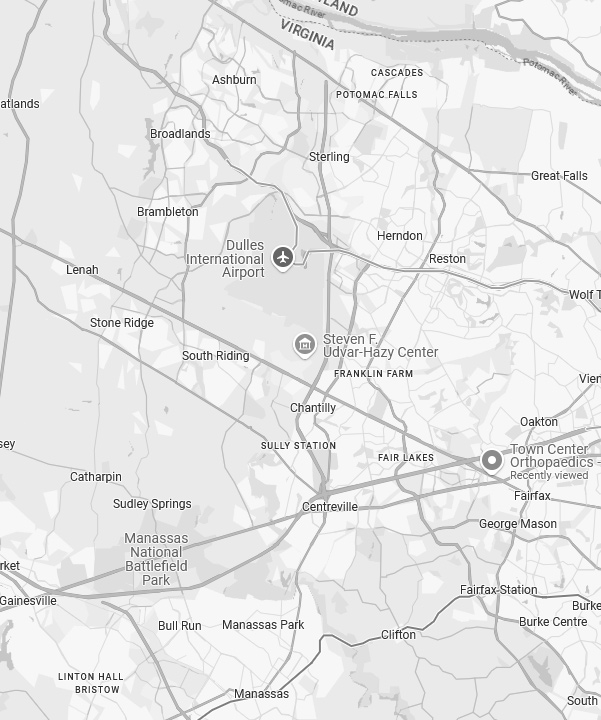
Jeffrey H. Berg, MD is a board-certified orthopaedic surgeon specializing in sports medicine, arthroscopic surgery, and the treatment of shoulder, knee, elbow, and ankle injuries. He practices at Town Center Orthopaedics, serving patients in Ashburn, Centreville, and Reston, Virginia. With more than two decades of experience in orthopaedic care, Dr. Berg is committed to helping athletes and active individuals recover from injury, restore function, and return safely to the activities they enjoy.
Credentials & Training
Originally from Philadelphia, Pennsylvania, Dr. Berg earned his medical degree from Boston University School of Medicine in 1992. He then completed five years of advanced orthopaedic training through his internship and residency in orthopaedic surgery. A former member of the Boston University football team, Dr. Berg developed an early interest in sports medicine and the unique challenges faced by athletes.
Following residency, he completed a prestigious fellowship in Orthopaedic Sports Medicine and Arthroscopy at the Nicholas Institute of Sports Medicine and Athletic Trauma (NISMAT) in New York City. His fellowship training focused on the diagnosis and treatment of sports-related injuries, advanced arthroscopic procedures, and the latest techniques in minimally invasive orthopaedic care.
Clinical Expertise
Dr. Berg specializes in the diagnosis, treatment, and prevention of sports-related injuries affecting the shoulder, knee, elbow, and ankle. His primary clinical interests include arthroscopic knee ligament reconstruction, shoulder stabilization procedures, rotator cuff repair, and the treatment of a wide range of athletic injuries and orthopaedic conditions. He utilizes both surgical and non-surgical treatment approaches tailored to each patient's goals, activity level, and recovery needs.
Throughout his career, Dr. Berg has served on the medical staff of numerous professional, collegiate, and high school athletic programs. He was the orthopaedic team physician for the Washington Professional Football team from 2002 to 2008 and currently serves as team physician for W.T. Woodson High School and Briar Woods High School.
Dr. Berg is among the first orthopaedic surgeons in the United States to earn the distinguished Subspecialty Certification in Orthopaedic Sports Medicine (CAQSM), a credential held by only a select group of specialists nationwide. He has served on the Public Relations Committee of the American Orthopaedic Society for Sports Medicine (AOSSM), acted as a principal reviewer for Sports Health: A Multi-Disciplinary Approach, and contributed to physician education as a preceptor for the VCU-Fairfax Family Practice Sports Medicine Fellowship.
In addition to his clinical work, Dr. Berg has authored numerous articles and conducted research on a variety of sports medicine topics. He has participated in the Multicenter ACL Revision Study through the AOSSM, helping advance the understanding and treatment of complex ACL injuries. His dedication to patient care and clinical excellence has earned him repeated recognition as a "Top Doctor" for Sports Medicine in Northern Virginia and designation as a "SuperDoc" in the Washington-Baltimore-Northern Virginia region.
Medical Disclaimer: This information is for educational purposes only and does not constitute medical advice. For diagnosis and treatment recommendations, please consult with Dr. Berg or another qualified orthopaedic specialist at Town Center Orthopaedics.
Content authored by Dr. Jeffrey H. Berg and verified against official sources.