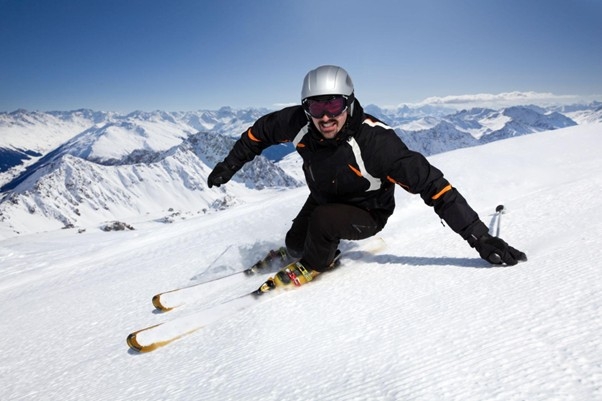
The exhilaration of carving down a pristine slope can quickly turn to agony with a single misstep or unexpected fall. For skiers, the shoulder is particularly vulnerable, often bearing the brunt of impact as we instinctively brace ourselves. Understanding why these falls frequently result in significant injuries like dislocations and labral tears is crucial for prevention and effective recovery.
The Mechanics of a Skiing Shoulder Injury
When a skier falls, the forces involved are often complex and high-impact. Common scenarios leading to shoulder injuries include:
- FOOSH (Fall On Outstretched Hand): This classic mechanism drives the upper arm bone forcefully into the shoulder socket, often leading to a shoulder dislocation.
- Direct Impact: Landing directly on the shoulder can create immense compression or shearing forces.
- Twisting Falls: When a ski gets caught and the body twists, the arm can be externally rotated and abducted (away from the body), putting extreme stress on the shoulder joint capsule.
These mechanisms combine to overwhelm the natural stability of the shoulder, which is the most mobile joint in the body.
What Happens During a Ski-Related Shoulder Dislocation
A shoulder dislocation occurs when the head of the humerus completely separates from the glenoid socket. This is an acute, intensely painful injury often accompanied by a visible deformity. For skiers, the arm is frequently forced into an abducted and externally rotated position during a fall, which is the "at-risk" position for an anterior (forward) dislocation. While some dislocations can be reduced on-site by trained personnel, proper medical evaluation is always necessary to assess for associated damage.
How Skiing Falls Can Tear the Shoulder Labrum
The labrum is a ring of cartilage that deepens the shoulder socket, enhancing stability and providing an attachment point for ligaments. When the shoulder experiences a traumatic event, such as a dislocation or a forceful impact, the labrum can tear.
- Bankart Lesion: A common type of labral tear associated with anterior shoulder dislocations, where the labrum detaches from the front of the glenoid.
- SLAP Tear (Superior Labrum Anterior Posterior): Often seen in overhead athletes, but can also occur from a FOOSH injury, involving a tear at the top of the labrum where the biceps tendon attaches.
Labral tears can cause persistent pain, clicking, catching, and a sensation of instability, even after a dislocation has been reduced.
Why Specialist Sports Medicine Care is Essential
For skiing shoulder injuries, especially dislocations and labral tears, a sports medicine orthopedic surgeon offers specialized expertise. Understanding the specific biomechanics involved in these high-energy injuries, focus can be on restoring both stability and full function necessary for athletic activities. Early and accurate diagnosis is key, using advanced imaging to guide tailored treatment plans, which often involve arthroscopic shoulder surgery for precise repair. The goal is not just to heal the injury but to optimize your recovery for a safe return to the slopes.
Get Back on the Slopes Stronger
If you've experienced a shoulder injury from a skiing fall, don't let persistent pain or instability keep you from the sport you love. Schedule a consultation today to discuss a personalized plan to restore your shoulder's strength and stability.
Author: Aaron Carter, MD is a board certified orthopaedic surgeon specializing in sports medicine, hip, knee, shoulder surgery, as well as general orthopaedics and fracture management. Dr. Carter specializes in Orthopaedic Surgery and Sports Medicine at Town Center Orthopaedics in Ashburn, Centreville, and Reston. Dr. Carter’s goal is to provide the best possible care so that patients can return to their favourite activities as soon as possible.