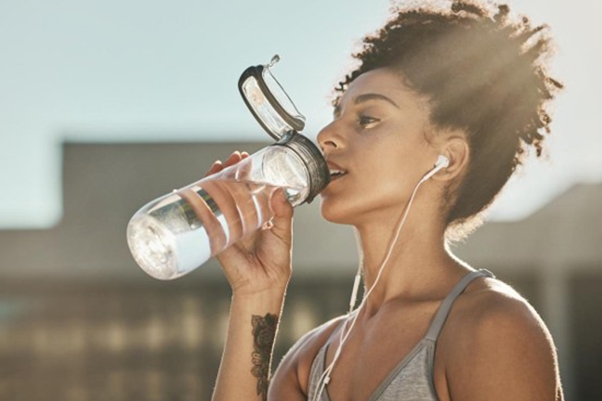
Summer heat does not just make exercise harder, it changes the internal environment that your joints, tendons, and soft tissues operate in. Dehydration reduces synovial fluid viscosity, increases cartilage friction, impairs neuromuscular coordination, and elevates injury risk in ways most athletes never connect to fluid intake. For anyone training, competing, or staying active through the summer months, understanding the relationship between hydration, heat, and joint health is essential.
How Dehydration Directly Affects Joint Function
Synovial fluid, the viscous liquid that lubricates and nourishes cartilage within every joint, is composed largely of water. When the body is dehydrated, synovial fluid production and viscosity are compromised, reducing the joint's ability to distribute load evenly across the articular surface. The result is increased cartilage contact stress with every step, jump, and change of direction, accelerating the micro-damage that accumulates during high-volume summer training.
Beyond cartilage, dehydration impairs tendon and ligament elasticity. Connective tissues that are adequately hydrated absorb and distribute load efficiently. Dehydrated soft tissue is stiffer, less resilient, and more susceptible to micro-tearing under the forces of athletic movement, particularly during the explosive direction changes and high-impact landings that define summer sport.
Heat Stress and Sports Injuries: What Changes in High Temperatures
Heat amplifies every physiological variable that contributes to sports injury risk. Core temperature elevation reduces neuromuscular reaction time, the speed at which muscles activate to protect joints during unexpected loads. Electrolyte depletion from sustained sweating alters the precision of muscle contraction, increasing the likelihood of cramping, loss of stability, and aberrant joint mechanics that place structures like the ACL, meniscus, and rotator cuff under abnormal stress.
| Risk Factor | Effect on Joint Health | Associated Injury Risk |
|---|---|---|
| Dehydration | Reduced synovial fluid volume and viscosity | Increased cartilage wear |
| Electrolyte Depletion | Impaired neuromuscular coordination | ACL, ankle sprain, muscle tears |
| Core Temperature Rise | Reduced reaction time and proprioception | Ligament and meniscus injuries |
| Soft Tissue Stiffness | Reduced tendon and ligament elasticity | Tendinopathy, rotator cuff stress |
| Fatigue-Induced Mechanics | Altered movement patterns under load | Knee, shoulder, and hip overuse injuries |
Hydration Strategies That Actually Protect Your Joints
The standard advice to drink when thirsty consistently underestimates fluid losses in hot weather training. For athletes exercising in summer heat, proactive hydration, beginning before the session, continuing during activity at regular intervals, and prioritizing rehydration post-exercise, is the framework that maintains synovial fluid quality and neuromuscular function across a full training day.
Sodium and electrolyte replacement matters as much as water volume. Plain water consumed in large quantities without sodium replacement during prolonged exercise dilutes plasma sodium concentration, impairing fluid retention and exacerbating the neuromuscular deficits that drive injury risk. Sports drinks, electrolyte tablets, and sodium-containing foods consumed during and after long sessions address this gap.
Tart cherry juice, consumed regularly during high-volume training periods, has demonstrated measurable reductions in exercise-induced inflammation and muscle soreness in endurance athletes, a straightforward dietary addition that supports recovery between summer training sessions.
The Sports Injuries That Peak in Summer Heat
Several specific sports injuries become disproportionately common when heat and dehydration are present in combination
ACL injuries: The neuromuscular fatigue and reduced reaction time associated with heat stress impair the dynamic joint stabilization that protects the ACL during cutting and landing, with injury rates in warm-weather training documented to be higher in the afternoon heat versus morning sessions.
Meniscal tears: Reduced synovial fluid quality under dehydration increases the compressive and shear forces the meniscus absorbs during pivoting and squatting movements, accelerating the micro-damage that progresses to symptomatic tearing in athletes already carrying early degenerative changes.
Rotator cuff injuries: Shoulder fatigue compounds quickly in heat, and the overhead athlete performing at a compromised neuromuscular state is at elevated risk for the kind of eccentric overload that produces partial and full-thickness rotator cuff tears.
Shoulder instability: Fatigue-driven loss of dynamic rotator cuff activation during overhead sport increases anterior and posterior glenohumeral translation, particularly in athletes with pre-existing capsular laxity.
Hip conditions including femoroacetabular impingement (FAI) are similarly aggravated during summer training blocks when athletes push volume and intensity without adequate recovery, hydration, and anti-inflammatory nutritional support.
When Summer Activity Produces Symptoms That Don't Resolve
Most hydration-related joint discomfort resolves with adequate rehydration, rest, and load reduction. Persistent joint pain, swelling, mechanical symptoms such as locking or catching, or instability following summer athletic activity warrants formal evaluation rather than continued training through it.
Orthobiologics including PRP injection therapy offer targeted, minimally invasive treatment for soft tissue and joint conditions that have not resolved with conservative management, restoring tissue health without requiring surgical intervention in appropriately selected patients. Physical therapy and manual therapy are available on-site to address the strength and movement deficits that accumulate over a demanding summer training season.
Summer should be spent enjoying the activities you love, not managing ongoing joint pain. If your symptoms aren't improving, our experienced team can help you find answers and develop a treatment plan focused on helping you Feel Better. Move Better. Be Better. Schedule a consultation at any of our four Northern Virginia locations.
Frequently Asked Questions
1. Can dehydration cause joint pain even without a structural injury?
Yes. Reduced synovial fluid quality from dehydration increases joint friction and cartilage contact stress, producing aching discomfort particularly in the knees and hips during and after exercise. Adequate hydration before, during, and after activity is the most immediate modifiable factor in joint comfort during summer training.
2. How much water should athletes drink during summer exercise to protect their joints?
General guidance recommends 16–20 ounces of fluid two hours before exercise, 6–8 ounces every 15–20 minutes during activity, and 16–24 ounces for every pound of body weight lost during a session. Athletes exercising in high heat for more than 60 minutes should incorporate electrolyte replacement alongside water.
3. Does heat make existing joint conditions worse?
Yes. Patients with early osteoarthritis, cartilage damage, or prior joint injuries often report increased symptoms in high heat and humidity, a pattern consistent with the physiological changes that heat and dehydration produce in synovial fluid quality and soft tissue resilience.
4. Are ACL injuries really more common in summer heat?
Research supports the link between neuromuscular fatigue, heat stress, and elevated ACL injury risk, particularly in afternoon sessions when core temperature and cumulative fatigue are highest. This is one of the strongest arguments for scheduling high-intensity training in cooler morning hours during peak summer months.
5. When should summer joint pain be evaluated by an orthopaedic specialist?
Any joint pain that persists beyond 48–72 hours of rest and hydration, is associated with swelling, produces mechanical symptoms such as locking or catching, or involves any sense of instability warrants a formal evaluation rather than continued activity modification.
Reference Links:
- Heat Therapy Helps Relax Stiff Joints - Arthritis Foundation
- Keep your cool while exercising in the heat - Mayo Clinic Health System
AUTHOR: Dr. Ryan G. Miyamoto, MD, FAAOS – Orthopaedic Sports Medicine & Joint Preservation Surgeon
Ryan G. Miyamoto, MD, FAAOS is a board-certified orthopaedic surgeon specializing in sports medicine, joint preservation, and arthroscopic surgery of the shoulder, hip, and knee. He treats athletes and active individuals of all ages, with expertise in shoulder instability, rotator cuff injuries, ACL reconstruction, meniscus and cartilage preservation, hip labral tears, femoroacetabular impingement (FAI), fractures, and arthritis. Dr. Miyamoto is committed to helping patients return to their active lifestyles through comprehensive, evidence-based care that includes non-surgical treatments, regenerative therapies, and advanced surgical techniques when necessary.
Credentials & Recognition
A native of Maryland, Dr. Miyamoto was a standout multi-sport athlete and earned First Team Washington Post All-Met honors as a quarterback, as well as Maryland Football Player of the Year recognition from the Touchdown Club of Washington, D.C. He graduated from Princeton University, where he was a member of the 1995 Ivy League Championship football team, before earning his medical degree from the University of Maryland School of Medicine.
Dr. Miyamoto completed his orthopaedic surgery residency at New York University Hospital for Joint Diseases, one of the nation's premier orthopaedic training programs. He then completed specialized orthopaedic trauma training at the renowned Shock Trauma Center in Baltimore, Maryland. Following residency, he pursued advanced fellowship training in Sports Medicine at the prestigious Steadman-Hawkins Clinic in Vail, Colorado, where he participated in the care of elite athletes, including members of the U.S. Ski and Snowboard Teams.
Dr. Miyamoto is a Fellow of the American Academy of Orthopaedic Surgeons (FAAOS) and serves as an Assistant Team Physician for the NFL's Jacksonville Jaguars. Throughout his career, he has provided medical coverage for professional and collegiate athletic events, including NFL games, the NFL Combine, collegiate football and basketball competitions, and professional golf tournaments.
Clinical Expertise
Dr. Miyamoto specializes in minimally invasive arthroscopic and reconstructive procedures of the shoulder, hip, and knee, with a particular focus on joint preservation in active patients. His expertise includes rotator cuff repair, shoulder stabilization procedures, ACL reconstruction, meniscus preservation and repair, cartilage restoration techniques, hip arthroscopy, labral repair, and treatment of femoroacetabular impingement (FAI). He also incorporates non-operative treatment options such as physical therapy, bracing, injection therapies, and regenerative medicine approaches, including stem cell therapy, when appropriate.
An accomplished researcher and educator, Dr. Miyamoto has authored numerous peer-reviewed publications in leading orthopaedic journals, including the American Journal of Sports Medicine, Journal of Bone and Joint Surgery, Journal of the American Academy of Orthopaedic Surgeons, and American Journal of Orthopaedics. He has also contributed book chapters on arthroscopic treatment of hip cartilage injuries and ACL injuries in mature athletes. Dr. Miyamoto has served as an instructor for multiple hip arthroscopy courses, presented nationally on sports medicine topics, and previously served as a consultant for the DePuy Mitek Hip Arthroscopy Division.
Medical Disclaimer: This information is for educational purposes only and does not constitute medical advice. For diagnosis and treatment recommendations, please consult with Dr. Miyamoto or another qualified orthopaedic specialist.
Content authored by Dr. Ryan G. Miyamoto and verified against official sources.