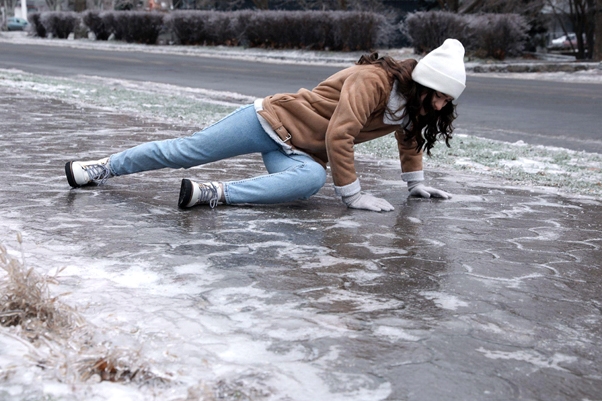
One patch of black ice, one split second, and your hands fly out to catch you. That instinct protects your head, but it often costs your wrist. Winter slips on icy sidewalks and steps send many people in with painful fractures. Prevention takes a few simple habits, and quick action matters when prevention fails. Here is how to protect your wrists this winter and what to do if you fall.
Why Wrists Take the Hit in Winter Falls
When you slip, your body reaches out automatically to break the fall. Your wrist absorbs a sudden load it was not built for. The most common result is a break of the radius, the larger forearm bone near the wrist. Another is a scaphoid fracture, a small bone on the thumb side that can be easy to miss at first. Sprains and ligament injuries also occur, and they can feel just as painful as a break.
Understanding the mechanism helps explain why even a short fall from standing height can cause a serious hand and wrist injury.
Everyday Habits That Prevent Slips
Small changes make a real difference when surfaces turn slick:
- Wear shoes with good traction. Rubber soles with deep treads grip better than smooth leather or worn sneakers.
- Walk like a penguin on ice. Take short, shuffling steps, keep your feet flat, and point your toes slightly outward.
- Keep your hands out of your pockets. Free hands help you balance and catch a handrail.
- Slow down. Rushing from the car to the door is when many slips happen.
- Use handrails on every step. Hold them even when the stairs look clear.
- Carry less. Use a backpack so both hands stay free, and avoid piling bags in your arms.
- Treat your own walkways. Salt or sand steps and driveways early, and clear snow before it packs into ice.
- Watch for black ice. Shaded spots, bridges, and parking lot edges often stay slick after other areas melt.
Be Careful Getting In and Out of the Car
Parking lots hold hidden hazards. Hold the car door or frame as you step out, and test the ground before you let go. Avoid stepping onto glossy patches or sloped curbs. When possible, park in a cleared or well-lit space.
Gear for Winter Sports
Skating, snowboarding, and sledding all raise wrist fracture risk. Wrist guards are widely recommended for snowboarders and skaters, especially beginners, because they spread impact across the forearm. Pick a pair that fits snugly and does not restrict circulation, and pair them with a helmet. If you play winter sports with children, make sure their gear fits properly too.
Strong Bones and Steady Balance
Falls are more likely when balance or strength declines, and bones that are thin break more easily. Eating enough calcium and vitamin D, staying active, and not smoking all support bone health. If you are over 50, have had a prior fracture, or have risk factors for osteoporosis, ask your doctor whether a bone density screening makes sense.
Physical therapy can also help with balance, leg strength, and walking confidence. Better stability reduces your odds of falling in the first place.
What to Do Right After a Fall
If you fall and your wrist hurts, stop and assess before you move:
- Do not push through the pain. Avoid using the hand for lifting or gripping.
- Support the wrist. Rest it against your body or a pillow in the position that feels most comfortable. Do not try to straighten or realign it.
- Remove rings and bracelets before swelling begins.
- Apply cold. Place an ice pack wrapped in a cloth on the area for short periods. Do not apply ice directly to skin.
- Elevate the arm above heart level if you can.
- Get evaluated. Wrist pain that persists after a fall deserves an exam and often an X-ray.
Signs Your Wrist May Be Broken
Common signs include severe pain, swelling, bruising, a visible bend or deformity, tenderness over a specific spot, and difficulty moving the wrist or gripping. Numbness or tingling in the fingers can signal nerve involvement.
Be careful with the "it's just a sprain" assumption. A scaphoid fracture, for example, may cause only mild swelling and pain with thumb movement, yet it can heal poorly if untreated. When in doubt, have it checked.
When to Seek Urgent Care
Go to an emergency department right away if bone is visible through the skin, the hand looks pale, blue, or cold, the wrist is clearly deformed, numbness is spreading, or bleeding will not stop. For pain after a fall that is less severe, call the office promptly so you can be seen. Quick evaluation matters because fractures are easier to treat before they start healing in the wrong position.
How Wrist Injuries Are Treated
Treatment depends on the type of injury. Many fractures that stay well aligned heal in a cast or splint, followed by monitoring with X-rays. Fractures that are displaced, unstable, or involve the joint surface may need surgery to restore alignment, often with plates, screws, or pins. The practice's hand and wrist surgeons evaluate each injury individually, and if your fall happened on the job, workers' compensation care may apply.
Recovery: Getting Your Grip Back
Stiffness is common after a wrist injury, even after a good repair. Occupational therapy focuses on restoring motion, grip strength, and the fine hand skills needed for daily tasks like writing, cooking, and typing. Following your therapist's home program between visits often makes the biggest difference in how fully you recover.
Frequently Asked Questions
What should I do if I fall on ice and my wrist hurts?
Stop using the hand, support the wrist in a comfortable position, apply a wrapped ice pack, and elevate it. Have it examined soon, because an X-ray is often needed to tell a sprain from a fracture.
How do I know if my wrist is broken or sprained?
Severe pain, swelling, bruising, deformity, and trouble gripping suggest a fracture, but a sprain can feel similar. Only an exam and imaging can tell the difference.
How long does a broken wrist take to heal?
Many wrist fractures need about six to eight weeks for bone healing, followed by therapy to regain motion and strength. Timelines vary with the type of fracture and whether surgery is needed.
Can I prevent wrist fractures when walking on ice?
You cannot eliminate the risk, but you can lower it. Wear traction-friendly shoes, take short steps, use handrails, keep hands free, and treat walkways before they ice over.
Do I need surgery for a broken wrist?
Not always. Stable, well-aligned breaks often heal in a cast or splint, while displaced or unstable fractures may need surgery. A hand and wrist specialist can recommend the right option.
Stay Steady, Stay Strong
If you have injured your wrist in a winter fall or want to reduce your risk before icy weather arrives, the team at Town Center Orthopaedics can help. You can meet our providers, read the new patient information, or schedule an appointment. From preventing injuries to restoring strength and function, we are here to help you Feel Better. Move Better. Be Better
AUTHOR: Dr. Mohammad Ali Khoshnevisan, MD, MBA - Hand & Wrist Surgeon
Mohammad Ali Khoshnevisan, MD is an hand and wrist surgeon specializing in the diagnosis and treatment of hand, wrist, and upper extremity conditions at Town Center Orthopaedics in Ashburn, Centreville, Fairfax, and Reston, Virginia. Dr. Khoshnevisan provides care for a wide range of hand and wrist conditions, with an emphasis on helping patients understand their diagnosis and treatment options so they can make informed decisions about their care.
Credentials & Recognition
A native of Germantown, Maryland, Dr. Khoshnevisan attended Seneca Valley High School, where he was a starting tackle on the 3A Football State Championship team. He went on to attend Juniata College, earning a degree in Biology and Business Information Technology while competing as a four-year member of the football and track and field teams. He subsequently served as a Clinical Coordinator for Hand and Upper Extremity Research at Massachusetts General Hospital and Harvard Medical School. Dr. Khoshnevisan completed a joint M.D./M.B.A. program through Sidney Kimmel Medical College at Thomas Jefferson University and Widener University, earning his M.D. and M.B.A. in Healthcare Administration.
Following medical school, Dr. Khoshnevisan completed his surgical internship at Thomas Jefferson University Hospital in Philadelphia and his surgical residency at Lehigh Valley Health Network in Allentown, Pennsylvania. He then completed fellowship training in orthopedic and plastic surgery hand and microsurgery at the renowned Christine M. Kleinert Institute and University of Louisville. During his fellowship, he also served at the region's busiest Level 1 trauma center, gaining extensive experience treating complex hand and upper extremity injuries and conditions.
Clinical Expertise
Dr. Khoshnevisan specializes in hand and wrist surgery and treats a broad spectrum of conditions affecting the hand, wrist, and upper extremity. His clinical expertise includes hand pain, wrist pain, carpal tunnel syndrome, cubital tunnel syndrome, trigger finger, thumb pain and arthritis, hand and wrist cysts, finger and hand contractures, fractures of the distal radius, metacarpals, scaphoid, and phalanges, rheumatoid and osteoarthritis of the hand, tendon injuries, nerve injuries, and other hand and upper extremity conditions.
Dr. Khoshnevisan works closely with Town Center Orthopaedics' occupational and physical therapy team throughout the treatment process, from diagnosis through rehabilitation. This collaborative approach is particularly valuable for patients recovering from work-related injuries and complex upper extremity conditions, with the goal of helping patients regain as much function as possible.
Beyond his clinical work, Dr. Khoshnevisan is committed to community service. Along with his brother, Dr. Mohammad Amin Khoshnevisan, he participates in mission trips providing care to underserved children and adults both in the United States and abroad.
Medical Disclaimer: This information is for educational purposes only and does not constitute medical advice. For diagnosis and treatment recommendations, please consult with Dr. Khoshnevisan or another qualified orthopedic hand and wrist specialist at Town Center Orthopaedics.
Content authored by Dr. Mohammad Ali Khoshnevisan and verified against information provided by Town Center Orthopaedics.